
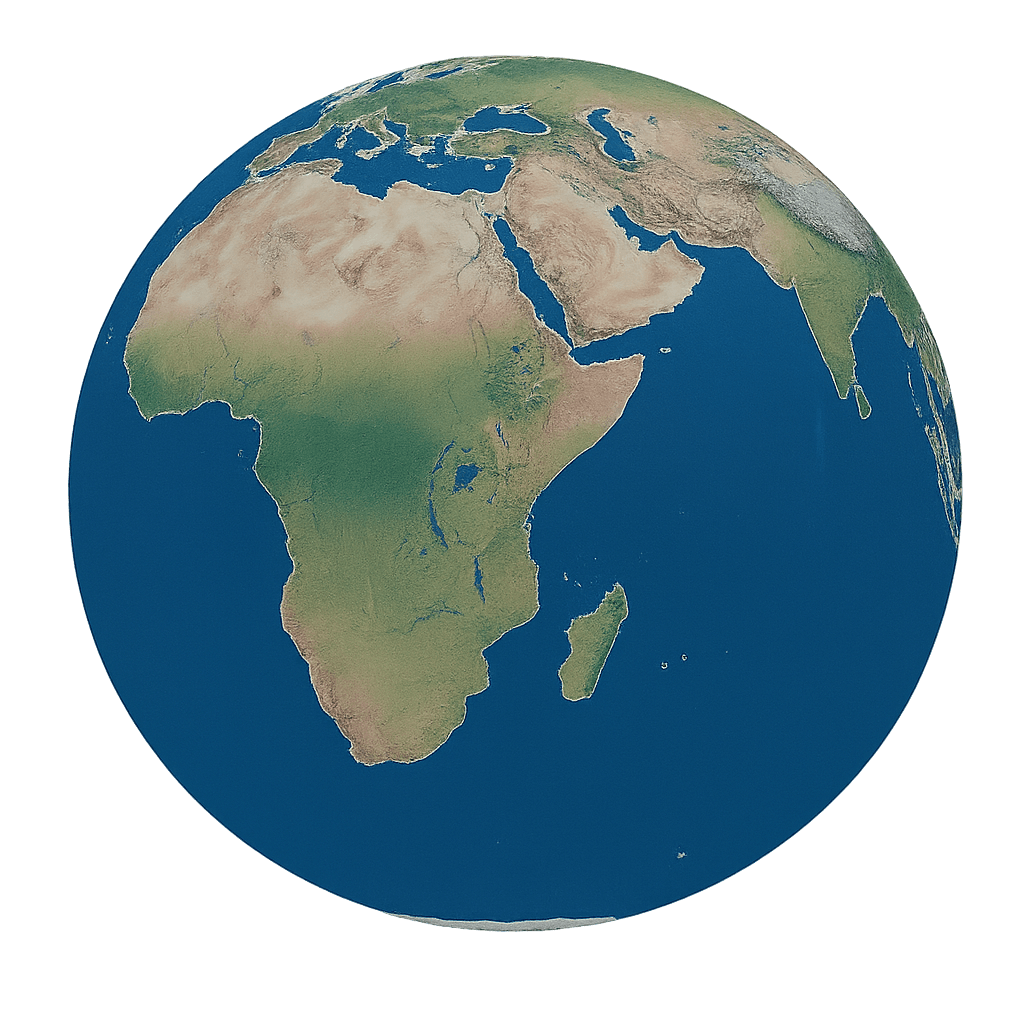
MATI spotlights smallholder farmers facing El Niño in India and Zambia
MATI released a field report during Climate Week NYC and UNGA capturing first-hand accounts from farmers in India and Zambia as a very strong El Niño builds into 2027. The report shows how delayed rain, heat and water stress are already changing planting costs, harvest outcomes and next season’s plans.
Why it matters: - Smallholder farmers are often the first to feel climate shocks and the last to be heard in policy discussions. - The report shows how a strengthening El Niño can raise costs before it cuts yields, especially for farmers already exposed to weather swings. - The findings matter beyond this season because forecasters expect the current El Niño to keep building into 2027.
What happened: - MATI released El Niño: Voices of the Farmers, a field report available at More information. - The report was published during Climate Week NYC and the UN General Assembly’s high-level week. - The report collects first-hand accounts from smallholder farmers in India and Zambia on the 2026 growing season. - MATI asked farmers three questions in September 2026: what changed in the weather, what the weather did to the farm and family, and what they expect next year. - The report includes each farmer’s answers in Hindi, English or Chitonga, plus surviving audio recordings and a photograph from the interview.
The details: - NOAA’s Climate Prediction Center said in its Sept. 10, 2026 update that there was a greater than 90% chance of a very strong El Niño through autumn and winter. - NOAA also gave a 75% chance that October to December would be stronger than any El Niño on record back to 1950. - Forecasters expect the event to continue building through the end of 2026 and into 2027. - El Niño usually weakens the Indian monsoon and dries southern Africa’s main rains, which Zambia’s maize crop depends on. - In India, the India Meteorological Department recorded 603.7 mm of rain from June 1 to Aug. 31, versus a normal 700.7 mm, or 14% below normal. - By Aug. 25, 348 of India’s 741 districts were below normal on rainfall. - On Sept. 11, India’s Ministry of Agriculture counted 426.81 lakh hectares of paddy planted, down from 443.78 lakh hectares a year earlier. - The India figure was a 4% decline year over year. - Farmers in India described a monsoon that arrived late and then became irregular. - Yogeshwar Pratap Singh in Amadand, Chhattisgarh, said the delay was about ten days and linked it to El Niño. - Farmers described extra irrigation, fertilizer and pesticide windows that opened and closed within a week, and a stem borer outbreak in late-transplanted crops. - Farmers also reported unplanned chemical costs. - Rakesh Kumar Baghde of Ugdewada, Madhya Pradesh, said weather often failed to match the calendar, with rain arriving when it should not and missing when it should. - Prashanta Mondal of Padampur said excessive heat shortened the time laborers could weed fields from 4-5 hours to 2-3 hours. - The report says not every village had the same season. - Several farmers described adequate rain, and villages within about 90 km of each other on the Jharkhand-West Bengal border had opposite outcomes. - The report’s central India finding is that a farmer can lose money in a season that still looks average in yield figures. - In Zambia, farmers in Mukuni outside Livingstone described the season they just finished. - After a dry 2024/25 season, they said 2025/26 brought enough rain and a good harvest. - Dominic Nyambe said waterlogging reduced part of his crop. - SADC expects drier-than-normal conditions across much of southern Africa for the 2026/27 rains. - SADC also flags Zambia for below-normal rainfall risk in the first quarter of 2027. - Dominic Nyambe cited the Meteorological Department’s forecast of below-normal rain in parts of Southern Province. - Asked about next year, farmers in India mostly named heat and groundwater, not rain. - Yogeshwar Pratap Singh said groundwater where water stood at 40 feet has fallen to 70 or 80 feet. - Naiki Hansda in Phulpahari said she plans to grow maize or millets if next year looks dry. - Every farmer in the report works with MATI, which has applied natural rock dust to their fields at no cost. - In ordinary years in India, MATI’s 235 paired plots with and without rock dust showed a median 25% higher yield. - That yield gain was worth about $480 more income per farmer per season, or 32% of household income. - MATI said those figures are not El Niño-year results. - The report does not claim rock dust protected any farmer’s yield this season. - MATI said it has no El Niño-year control or measurement linking rock dust to water retention. - Every farmer in the report consented to publication of name, photograph and recorded voice. - Farmers are available for interview through MATI’s press office, with translation.
Between the lines: - The report is as much a documentation exercise as a climate analysis, using direct farmer testimony to show how weather shocks show up in budgets, labor and crop decisions. - The India accounts suggest that even when rainfall totals do not collapse, timing alone can disrupt planting and raise costs. - The Zambia accounts point to a different risk: one season of relief can be followed by a forecast that flips back to dryness before the next harvest cycle. - MATI’s rock-dust program is included in the background, but the report separates its ordinary-year yield data from this El Niño season to avoid overstating any climate benefit.
What’s next: - Farmers in India are already weighing heat-tolerant or drought-tolerant decisions for the next season. - Farmers in Zambia are watching the 2026/27 rains and the first quarter of 2027 for below-normal rainfall. - MATI says more farmer interviews can be arranged through its press office as the El Niño develops.
The bottom line: - The report argues that climate risk is no longer a future problem for these farmers; it is already reshaping planting costs, labor, yields and next year’s choices.
Disclaimer: This article was produced by AGP Wire with the assistance of artificial intelligence based on original source content and has been refined to improve clarity, structure, and readability. This content is provided on an “as is” basis. While care has been taken in its preparation, it may contain inaccuracies or omissions, and readers should consult the original source and independently verify key information where appropriate. This content is for informational purposes only and does not constitute legal, financial, investment, or other professional advice.
Sign up for:
Zambia Tech Portal
The daily local news briefing you can trust. Every day. Subscribe now.
Check Your Email!
We sent a one-time activation link to: .
Confirm it's you by clicking the email link.
If the email is not in your inbox, check spam or try again.
Welcome back!
is already signed up. Check your inbox for updates.